

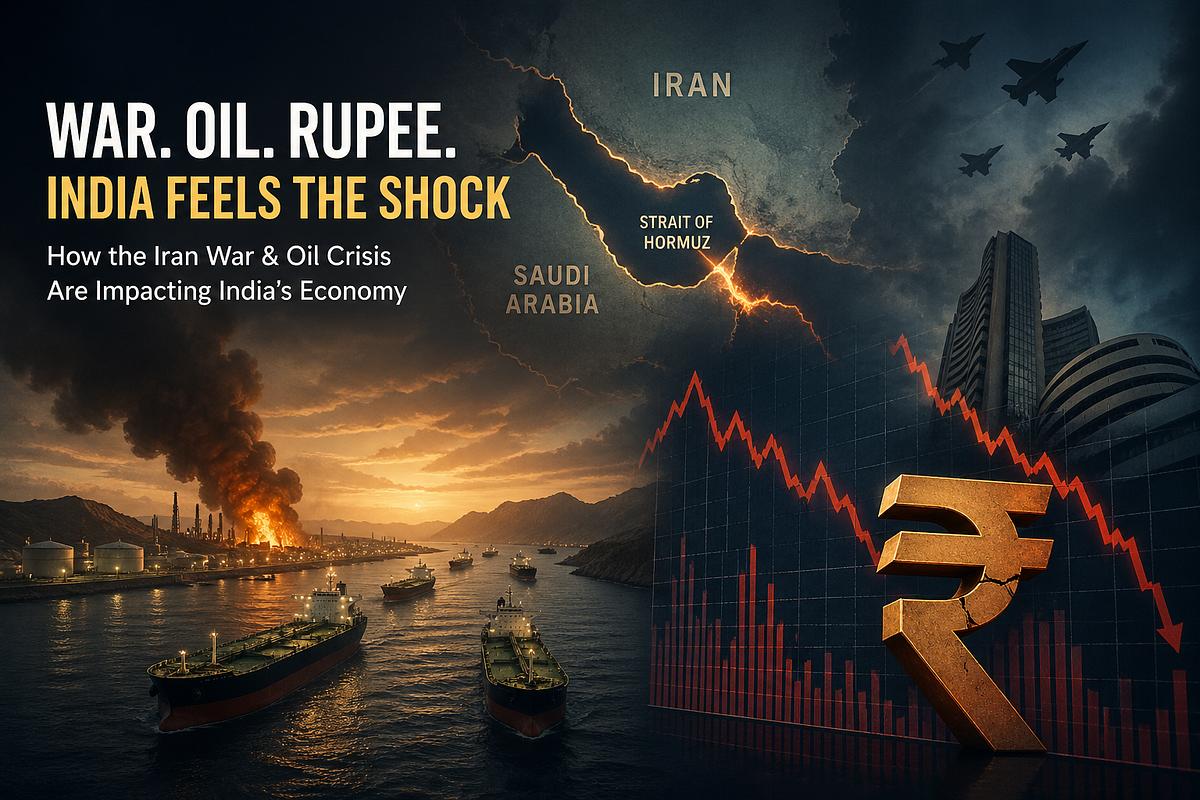
The war in the Middle East represents a massive shock to the modern global economic framework. Geopolitical instability across this critical region disrupts international trade routes and energy markets. The world economy was already recovering from previous structural shocks. This prolonged conflict adds new layers of risk and uncertainty for nations everywhere. Energy security remains the primary transmission vector of this macroeconomic crisis. Supply
chains face severe disruptions as key maritime corridors become dangerous for commercial vessels. Central banks must navigate a complex landscape of persistent inflation and slowing growth. The balance between maintaining price stability and supporting economic expansion becomes harder to achieve. Geopolitical alignment shifts as nations seek alternative financial mechanisms to insulate themselves from external vulnerabilities. Capital flows reflect deep risk aversion among international investors. Safe-haven assets experience high demand while emerging markets face capital flight. This comprehensive article provides a detailed analysis of
these global economic challenges based on verified 2026 economic data metrics. It places a specific focus on the severe economic problems confronting India and concludes with structural
paths proposed to bring an end to the war.
Global energy markets feel the immediate impact of hostilities in the Middle East. The region contains a significant portion of the proven oil and natural gas reserves in the world. According to data verified by the United States Energy Information Administration, the Strait of Hormuz is a vital maritime chokepoint for global energy transit. It handles over twenty percent of global liquefied natural gas exports and twenty to twenty-five percent of global seaborne oil trade daily.
Any threat to this corridor triggers immediate reactions in commodity trading pits. Brent crude prices have experienced significant volatility throughout the conflict. Prices frequently spike past ninety dollars per barrel and threaten to break higher, as tracked by Reuters Market Intelligence. High energy prices act as a direct tax on consuming nations. They raise the cost of production
for almost every industrial sector. Refined fuels like diesel and gasoline become more expensive for logistics networks. This increases the final cost of consumer goods and services
globally. Energy-exporting nations within the Gulf Cooperation Council also face internal structural challenges. They must manage the domestic economic fallout of a regional war while attempting to maintain output stability. The International Monetary Fund has downgraded growth forecasts for the wider region to a sharp zero point seven percent growth rate due to these compounding pressures. Non-oil sectors in these economies face contraction as security concerns deter foreign direct investment. The volatility in energy prices creates fiscal planning challenges for governments worldwide.
Global supply chains are highly vulnerable to transport bottlenecks caused by regional conflict. The maritime route through the Red Sea and the Bab al-Mandab strait is a critical link between Asia and Europe. Commercial vessels routinely use this path to avoid the lengthy journey around the African continent. Ongoing security threats have forced shipping lines to reroute their fleets around the Cape of Good Hope, as detailed in modeling by the Peterson Institute for International Economics. This detour adds thousands of miles to maritime journeys. It increases transit times by multiple weeks for container ships and tankers. Longer journeys require
significantly higher fuel consumption for shipping companies. Maritime insurance premiums have skyrocketed due to the heightened risk of drone attacks and vessel seizures. Shipping
lines pass these added expenses directly to manufacturers and consumers. The availability of shipping containers faces imbalances at key global ports. This shortage drives up spot freight
rates across alternative trade lanes. Industrial manufacturing networks operate on just-in-time inventory systems. Delayed arrivals of critical components force factories to slow down or halt
assembly lines. Secondary impacts emerge in sectors like automotive manufacturing and consumer electronics. The cumulative effect of these shipping delays reduces global trade efficiency and dampens economic growth.
The economic problems in India are particularly severe due to its high dependence on external resources. India is the third largest consumer of energy in the world. Data from the International
Food Policy Research Institute confirms that the nation imports more than eighty-five percent of its crude oil requirements and more than sixty percent of its liquefied petroleum gas needs. High
international crude oil prices expand the trade deficit of India rapidly. The Indian crude basket becomes more expensive and drains valuable foreign exchange reserves. Domestic oil
marketing companies face compressed margins or must pass higher costs to consumers. Higher fuel prices at the pump immediately increase transport costs for agricultural goods and manufactured products. This creates persistent food inflation and core inflation across the domestic economy. The Reserve Bank of India must maintain a cautious monetary stance to control these inflationary pressures. Higher domestic interest rates increase borrowing costs for local businesses and consumers. This slows down private capital expenditure and dampens retail consumption. The fiscal math of the central government faces pressure as fuel subsidies may require expansion to protect vulnerable populations. Energy insecurity remains a structural threat to the long-term growth trajectory of the Indian economy.
Supply chain bottlenecks create deep structural challenges for Indian exporters. The European Union and the United States are critical destinations for Indian manufactured goods. Exporters of textiles and garments face delayed delivery schedules and higher freight costs. The engineering goods sector relies heavily on predictable maritime transit through the Red Sea corridor. Small and medium enterprises dominate these export sectors and operate on thin financial margins. They cannot easily absorb sudden increases in shipping costs and insurance premiums. The ceramics manufacturing cluster in Morbi faces rising input costs and delayed shipments to international buyers. Chemical engineering plants experience shortages of
essential imported raw materials. Indian ports face congestion as schedules become unpredictable for arriving vessels. The reduced competitiveness of Indian exports impacts job creation in labor-intensive sectors. A prolonged contraction in export volumes threatens the manufacturing ambitions of the nation. The external sector faces widening current-account deficits as import values outpace export revenues, as documented in the Peterson Institute for International Economics macroeconomic reports. This imbalance weakens the fundamental macroeconomic stability of the country.
The agricultural sector in India faces direct risks from disruptions in the Middle East. Data verified by the International Food Policy Research Institute shows that India relies on the Middle East for forty to forty-two percent of its direct finished fertilizer imports, alongside sixty to sixty- five percent of its natural gas and ammonia requirements used in domestic fertilizer manufacturing. Key compounds like urea and ammonia are essential for maintaining domestic crop yields. Reduced industrial output from Gulf producers slows down the supply of these critical inputs. Shifting trade routes adds significant freight costs to fertilizer imports. According
to the Ashoka Center for Economic Policy, the government of India provides substantial fertilizer subsidies to support farmers, and rising international prices significantly increase the fiscal burden of these subsidies on the national budget. If the government cannot absorb the costs the prices for farmers must rise. Higher input costs reduce the profitability of farming operations across rural India. This threatens food production cycles for essential crops like rice and wheat. Rural incomes suffer when agricultural productivity declines or input costs surge. A slowdown in the rural economy reduces overall domestic demand for consumer goods. The entire economic
fabric of India remains deeply tied to the stability of its agricultural foundations.
The Indian diaspora in the Middle East represents another vector of economic vulnerability. Close to nine million Indian citizens live and work within the Gulf Cooperation Council countries. These workers send home billions of dollars in remittances every year. Kerala and Tamil Nadu receive a significant portion of these inflows to support local households. Remittances are a major source of foreign capital for the Indian balance of payments. The financial strain of the
war slows down infrastructure projects and economic activity in the Gulf. This reduces employment opportunities and wage growth for expatriate workers. A decline in remittance inflows reduces the disposable income of millions of families in India. It impacts local real estate markets and retail sectors in high-migration states. The potential necessity of large-scale repatriation creates logistical and financial risks for the Indian government. Returning citizens
require economic integration and employment in a crowded domestic labor market. The social and economic safety net faces pressure from any sudden shift in diaspora dynamics.
Capital flight complicates the macroeconomic management of the Indian economy. Statistical tracking from the Reserve Bank of India confirms that international institutional investors have reacted to the geopolitical conflict by reducing exposure to emerging markets. They have withdrawn billions of dollars from Indian equities and debt instruments to seek safety. This massive outflow of capital exerts downward pressure on the Indian Rupee, pushing the currency
toward historic lows against the United States Dollar. A weaker rupee makes all imports significantly more expensive for India. It amplifies the cost of importing crude oil and electronics and defense equipment. Reserve Bank of India bulletins show that the central bank has actively intervened to defend the currency by selling foreign exchange reserves. This action reduces the total buffer available to withstand future external shocks. Capital flight also lowers liquidity in domestic financial markets. It increases volatility in stock indices and raises the yields on government bonds. Higher bond yields increase the borrowing costs for the government to fund
infrastructure development. The combination of currency depreciation and capital outflows restricts the policy options available to economic managers.
RECOMMENDATIONS FOR DE-ESCALATION
The following structural and diplomatic paths represent frameworks proposed by the author to resolve the underlying geopolitical crisis and restore long-term economic stability:
Enforcement of Neutral Maritime Security Corridors: A coordinated international naval coalition should protect the Strait of Hormuz and the Bab al-Mandab strait. This coalition should include major global trading nations like the United States, China, India, and
European powers. Securing these channels removes the ability of warring factions to use global trade as political leverage. Commercial shipping must receive absolute guarantees of safe passage through international waters. De-escalating maritime tensions lowers
insurance premiums and stabilizes global freight rates immediately. It restores predictability to international supply chains and protects consumer economies from inflation. Maritime security represents a shared global interest that can transcend traditional geopolitical
rivalries. Coordinated patrols can serve as a baseline for wider stability agreements.
Binding United Nations Security Council Resolutions: The major global powers must reach a consensus to implement an immediate ceasefire. This resolution must contain enforceable mechanisms rather than symbolic language. Strict economic sanctions must
apply to any party that violates the ceasefire terms. An absolute embargo on arms transfers to the active combat zones must receive universal compliance. Global powers must stop providing diplomatic cover to proxies involved in the conflict. The United Nations can deploy peacekeeping forces to monitor border zones and buffer sectors. Enforceable resolutions provide the legal and structural framework needed to halt hostilities. They signal to all
participants that the international community will not tolerate continued destabilization. The authority of international law must receive clear backing from economic and political consequences.
Direct Regional De-escalation Dialogues: Backchannel diplomacy facilitated by neutral intermediaries is crucial for this process. Countries like Oman and Switzerland possess the diplomatic infrastructure to host confidential talks. The dialogues must address core territorial disputes and mutual security guarantees directly. Long-term stability requires the creation of a regional security architecture similar to historical European frameworks.
Adversaries must find paths toward peaceful coexistence through incremental confidence- building measures. This includes the exchange of prisoners and the cessation of hostile rhetoric in state media. Regional dialogue must focus on shared challenges like water
scarcity and climate change to build common ground. Economic cooperation can eventually replace military competition as the dominant mode of regional interaction.
Economic Diversification Incentives: Global trade bodies can offer powerful economic diversification incentives to sustain peace. International financial institutions can design
massive reconstruction funds for devastated areas. Access to these funds must remain strictly conditional on the absolute maintenance of peace agreements. Preferential trade agreements can open international markets to regional goods if stability is preserved.
Transitioning regional economies away from wartime production creates a material interest in peace. Local populations need access to employment, infrastructure, and modern healthcare systems. Economic incentives change the internal political calculations of ruling factions. The tangible benefits of global integration can outweigh the ideological drivers of conflict, serving as an alternative path to disrupt radicalization cycles.
Strengthening Middle Powers Diplomacy: Nations like India maintain unique and balanced relationships with both Israel and various Arab states. India can leverage its historical non-aligned status to act as a credible mediator. Middle powers are not viewed
with the same suspicion as traditional superpowers. They can facilitate humanitarian corridors and negotiate localized truce agreements. This diplomacy can focus on practical
outcomes like medical aid delivery and civilian protection zones. India can host neutral peace summits to explore common ground between moderate factions. Utilizing middle
powers expands the diplomatic toolbox beyond the gridlock of traditional superpower rivalries. It allows for creative diplomatic configurations that alter geopolitical perceptions and prioritize regional human security over global dominance.
CONCLUSION
The global economy cannot achieve sustainable growth while its primary energy and trade corridors remain in a state of war. The interconnected nature of modern trade ensures that a
conflict in the Middle East impacts a consumer in Asia and a manufacturer in Europe. India faces an intricate web of economic challenges that require careful domestic management and
proactive external diplomacy. Managing inflation and protecting energy security are immediate priorities for the nation. Long-term relief can only arrive through a comprehensive resolution of
the underlying geopolitical crisis. Enforcing maritime safety, deploying international law, and providing economic incentives offer realistic paths toward peace. The global community must
act with collective urgency to implement these structural solutions. Restoring stability to the Middle East is an economic necessity for the entire world.
SOURCES:
- United States Energy Information Administration
- International Monetary Fund
- Organization for Economic Co-operation and Development
- World Economic Forum
- Reuters Market Intelligence
- Peterson Institute for International Economics
- International Food Policy Research Institute
- Ashoka Center for Economic Policy
- Reserve Bank of India